Alfred Lansing
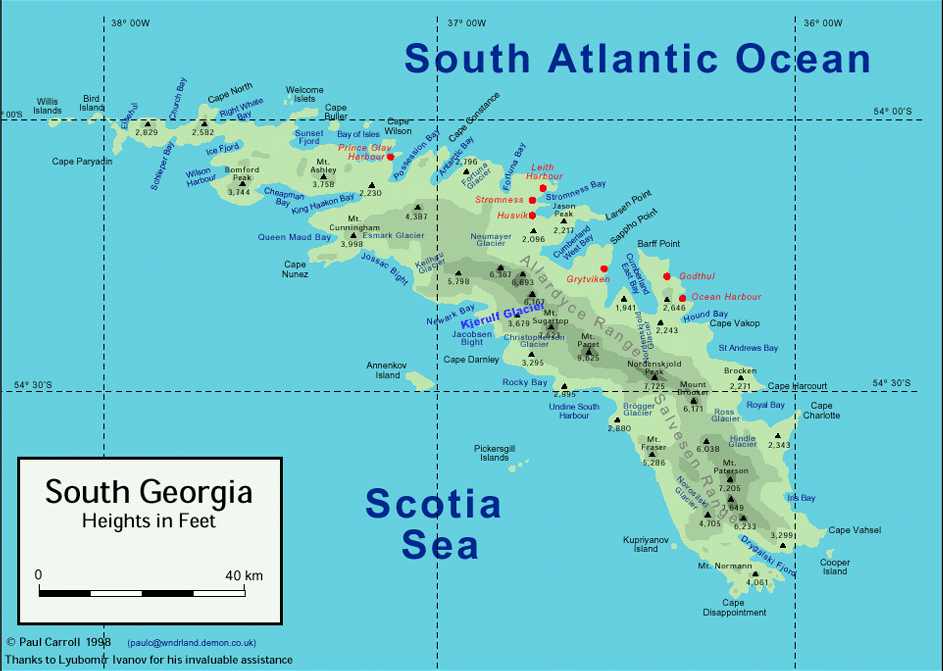
Map of South Georgia
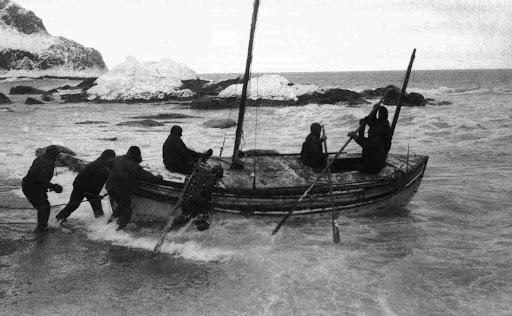
"Certainly no great urging was needed, and one at a time they jumped from the rocks into the boat, leaving behind them without a second thought dozens of personal little items which only an hour before had been considered almost indispensable."
page 280
Rescue had finally come. However, like always, it had been extremely difficult to achieve. Upon reaching South Georgia, Shackleton realized that he would have to cross the island to reach Stromness whaling station in order to bring rescue. After climbing mountains, scaling vertical drops, and missing their target several times, Shackleton and the two other men with him finally reached Stromness and did the first thing anyone in their situation would want to do: take a bath and shave. After retrieving the other three men from the other side of the island, Shackleton organized several attempts to retrieve the men marooned on Elephant island. In their excitement they abandoned personal belongings.
This behavior reminds me of my dogs. If my dogs are playing with their toys and they hear someone come home, they immediately drop it and run to see them with tails wagging. It may sound degrading to compare marooned men to dogs, but there are a few psychological similarities between the two groups. When somebody leaves a dog, the dog thinks that it might be the last time they see the person, especially with our sporadic schedules. Similarly, the marooned men believed they would never see their homes or loved ones again while stuck on that island, so when they saw the ship that would rescue them, they cared only about returning home and seeing all that they used to enjoy seeing. I think this relationship between my dogs and the crew members reveals something about the innermost human tendencies: that in times of loss and fear, we prioritize the things in life that are truly important; the crew prioritized their homes while my dogs prioritize their owners(one of the oddest comparisons I've made, but, still, it works). Peyton Schneider raised a very good point in her blog "Why Not" when she said that the crew's experience gave them a new appreciation for nature.
Although some of the truly important pros of this voyage came with the improvement of the crew members' characters, another huge accomplishment was made by Shackleton; not a single man died on the expedition. Ironically, the same expedition that humbled him the most saw his greatest feat of leadership. However, the effects of this voyage are still being felt today. Through this book, readers are able to imagine themselves in the most dire of circumstances and imagine what they would do. From what I observed, I am most like Shackleton, in that I am a very cautious and concerned person and I can never let myself fail any of my responsibilities or obligations.
I have shown what I learned about myself. What have you discovered about yourself?